
Components and technologies such as sensors, vision systems, drives and software never function as islands. These individual elements are ultimately integrated into larger systems to streamline processes and optimise results for end customers and users. In today’s world, they frequently involve automation, artificial intelligence and robots.
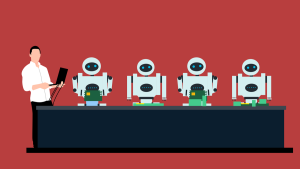
Robots that can work independently are becoming increasingly prevalent across many sectors and solving problems in rapidly evolving industries. First pioneered in the automotive industry to take on repetitive tasks such as welding and painting, robotics has long since moved into a vast array of fields – from assembly lines and warehouses to agriculture, medical settings and restaurants – and can now master high-precision tasks and even make decisions when paired with AI.
This advancement in robot capabilities has led to the technology being much in demand by companies as a way of tackling labour shortages. With many countries faced with ageing and shrinking populations, changes in migration policies and education systems that are not always able to keep pace with ever-changing technology, many businesses are turning to robots to plug skills gaps. Indeed, the role that robotics plays in addressing shortages of skilled workers is a trend highlighted for 2026 by the International Federation of Robotics (IFR).*
The latest robots are adept at completing repetitive, routine tasks and can consistently achieve excellent levels of accuracy: unlike us humans, they are not prone to fatigue and stress – although they do of course require regular inspections and maintenance to keep them in ideal shape. By taking on activities such as pick-and-place work on conveyor belts, or sorting and packaging in factories and warehouses, robots are on hand to do the work that does not stimulate or motivate human workers, leaving us to focus on more creative, strategic and decision-making roles. What’s more, robots are able to assemble small components in tight spaces or work in dangerous environments involving chemicals or heat, for example, meaning that health and safety risks for human staff is reduced (as is the resulting liability for employers).
Where robots reach their limits, however, is in activities requiring emotional responses, relationship building and decisions to be taken on an individual, context-specific basis, such as those in a patient care setting or in customised manufacturing. These need human intelligence, analytical skills and high levels of dexterity – all of which either cannot be replicated by robots or would require huge investments in engineering and programming, to the point of making a robotics solution unviable.
While robots have proven their worth on production lines or in the form of autonomous guided vehicles or mobile robots in warehousing and logistics, there are still various shortcomings and areas of concern to be addressed before the technology can be in a position to replace human staff altogether. Robots need to demonstrate that they are as least as productive, efficient, reliable and dexterous as humans on a long-term basis. Certain applications requiring emotional intelligence and unpredictable decision-making are set to remain solely the realm of human workers. Furthermore, concerns about safety standards, liability if things go wrong, plus cybersecurity and data security risks are yet to be fully addressed and represent a barrier to acceptance in industry and society more broadly.
The challenge for industries, businesses and users alike is to avoid the “us” versus “them” mentality: rather than seeing robots as a potential threat to safety, jobs and global economic models, the focus is now set to be on framing robots as “allies”, as the IFR terms them. The aim of these high-tech helpers is to support human workers and users with both specialist and day-to-day activities, form part of a cutting-edge workplace to attract skilled workers and new talent, and allow businesses to become more flexible as they reshape their working environments and workforces to cater to ever-evolving requirements.
Ultimately, it will be a question of humans and robots working together, with humans having oversight and understanding the big picture of where technology and human expertise can align with and enhance processes and staffing structures, both today and in the future.
At LK Translations, we relish the challenge of deploying our human expertise and technical knowledge to learn how each component, product and technology we translate documentation for will play its role in the industries and workforces of tomorrow.